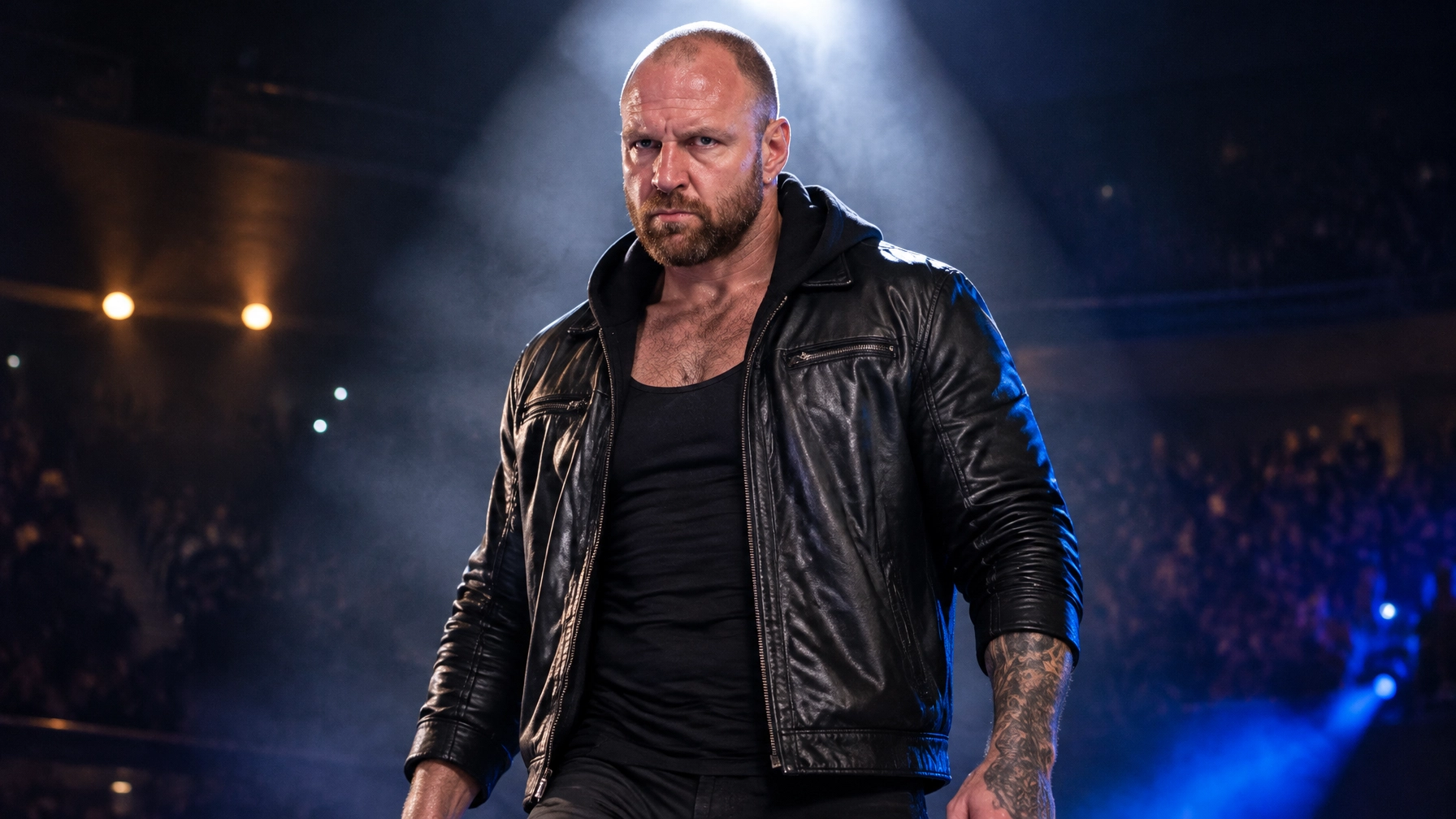
The lights cut through the haze at Ryogoku Kokugikan, and a familiar, hard-eyed presence appeared on screen. Jon Moxley did not walk through the curtain at NJPW King of Pro-Wrestling on October 12. He did not need to. A video package was enough to ignite the arena, and send a bombshell through the wrestling world.
The message was unmistakable: Moxley intends to return to New Japan Pro-Wrestling.
For a wrestler whose career has been shaped by collisions across borders, the tease carries the force of a challenge and the promise of another violent chapter. It is not yet a match announcement. But the door is open, and fans on both sides of the Pacific are already looking through it.
A return tease, not a match announcement
Moxley appeared in a video package at the Tokyo event, signaling that his New Japan story is not finished. The moment followed a growing tension around Shingo Takagi, who has been calling for a confrontation. Takagi made his intentions clear after the video: he wants Moxley in the ring and believes he can show him the strength of “Made in Japan.”
That challenge gives the tease a target. It does not make the match official.
That distinction matters. No date or venue for a Moxley–Takagi bout was announced at King of Pro-Wrestling, and Moxley did not appear in person. For now, the confirmed news is a return signal, not a completed deal or a scheduled contest. The rest is a story still taking shape.
Still, the image of Moxley pointed toward Japan has enormous weight. His New Japan appearances have been short compared with his long résumé, but they have left a fierce impression: punishing matches, high stakes, and a refusal to soften his approach for any ring.
Why New Japan remains part of Moxley’s story
Moxley is not a visitor with no history in New Japan. He has held the IWGP Heavyweight Championship, claimed multiple NEVER Openweight Championship reigns and stood at the center of international faction warfare. Those chapters established him as more than an imported name: he became a volatile, commanding force within the promotion’s ecosystem.
His style has always fit a certain kind of New Japan fight. Moxley wrestles as if the contest could break apart at any second: fast, physical and menacing. His reputation for hardcore matches, blood and deathmatch violence has made him one of the most unpredictable figures of his generation. In the ring, chaos is not a detour from the story. It is often the story.
That reputation gives a potential clash with Takagi immediate stakes. Takagi is a proud standard-bearer for New Japan, a hard-hitting champion of its own identity. Moxley brings the aura of an international disruptor who has already fought his way through the company’s championship ranks. Their styles promise impact; their competing claims to toughness could make the match feel personal before the bell even rings.
And Moxley is not returning to Japan as a nostalgic guest. He remains an active AEW centerpiece.
The AEW calendar adds urgency
Moxley is currently AEW Continental Champion and a former multi-time AEW World Champion. On October 17, just five days after King of Pro-Wrestling, he is scheduled to defend the Continental Championship against Mark Davis at AEW WrestleDream.
That looming defense sharpens the questions surrounding the tease. Would Moxley’s New Japan return begin after WrestleDream? Could it develop alongside his AEW commitments? And might the title match against Davis become part of a wider story about how far Moxley can stretch his reach?
Those possibilities are analysis, not confirmed plans. The event supplied no schedule for Moxley’s next New Japan appearance, and nothing about the video establishes an arrangement beyond his stated return intention. But the timing is difficult to ignore: Moxley is moving toward a major AEW title defense while New Japan is inviting him back into its orbit.
The AEW stakes are already intense. At All Out, Moxley lost an AEW World Championship match to Will Ospreay in a brutal, overbooked brawl. The defeat did not erase his menace, but it left unfinished business hanging over his AEW run. A New Japan program could become a new front in his career, or a way to rebuild momentum before another pursuit of the world title.
Moxley has never needed a quiet stretch to reinvent himself. He turns setbacks into fuel.
The Forbidden Door swings both ways
The Moxley tease also underscores how much the relationship between AEW and New Japan has evolved. The traffic is no longer a rare novelty reserved for one huge cross-promotional event. Wrestlers move between the promotions, rivalries travel with them, and a familiar face can alter the temperature of an entire card.
AEW names have stepped into New Japan’s demanding tournament and title landscape, while New Japan stars have brought their own legacies into AEW rings. The exchange has included major figures such as Kenny Omega, Bryan Danielson, Eddie Kingston, Kazuchika Okada and Will Ospreay, among others. Each appearance carries a different meaning: a dream match, a title challenge, a reunion, or a reminder that no promotion’s boundaries can fully contain its biggest stars.
The MJF–Ryohei Oiwa thread offers another vivid example of that two-way traffic. Oiwa, fresh from winning the G1 Climax, has drawn a challenge from MJF, who has tried to pull him into a confrontation while Oiwa’s focus remains on his championship ambitions in New Japan. It is a separate story from Moxley’s return tease, but it points to the same broader reality: AEW talent can reach into New Japan’s most consequential moments, and New Japan wrestlers can answer on their own ground.
That exchange benefits both sides when it preserves what makes each promotion distinct. Moxley’s return would not simply add a recognizable Western star to a card. It would bring a proven champion with a history in New Japan, a connection to AEW’s current title picture and a style that promises collision rather than ceremony.
Analysis: What a New Japan run could mean
Speculation and analysis: A Moxley run in New Japan could serve several purposes at once. A program with Takagi would give the return a clear, physical centerpiece. A faction angle involving Moxley and the Death Riders could extend the story beyond one match. And a series of appearances could help New Japan sustain attention among Western fans who follow Moxley closely through AEW.
For New Japan, the potential is not only commercial. Moxley’s familiarity to international audiences can create a pathway into stories built around New Japan’s roster and identity. The strongest version of that strategy would put local stars at the heart of the narrative, with Moxley as the catalyst, not the whole attraction. Takagi’s challenge already points in that direction: he is not asking for Moxley’s validation. He is promising to test him.
For AEW, a return could demonstrate that its relationship with New Japan remains active and meaningful even as its own championships and storylines continue at full speed. But shared talent also creates practical questions about scheduling, title commitments and how each appearance affects the other promotion’s stories. Those answers are not available yet.
The opportunity is enormous. So is the risk of trying to do too much at once. Moxley’s presence should raise the stakes, not blur them.
A familiar storm on the horizon
At King of Pro-Wrestling, no bell rang for Moxley. No opponent stood across from him. Yet the video package gave the crowd something nearly as powerful: the sense that a major force was preparing to return.
Now Takagi has thrown down the challenge, Moxley has a Continental Championship defense ahead, and AEW and New Japan remain connected by a steady exchange of talent and ambition. The next step is still unconfirmed. That uncertainty is part of the electricity.
When Moxley finally steps back into a New Japan ring, he will arrive carrying more than a reputation for blood and brutal fights. He will bring the weight of unfinished history, and a chance to prove that the forbidden door does not merely swing open. Sometimes, it leads straight back to a legacy still waiting to be written.